


David Heyes
Adolf Míšek: Sonata No. 1 Op. 5 for double bass in orchestral tuning (ed. David Heyes)
Adolf Míšek: Sonata No. 1 Op. 5 for double bass in orchestral tuning (ed. David Heyes)
Couldn't load pickup availability
About the Composition
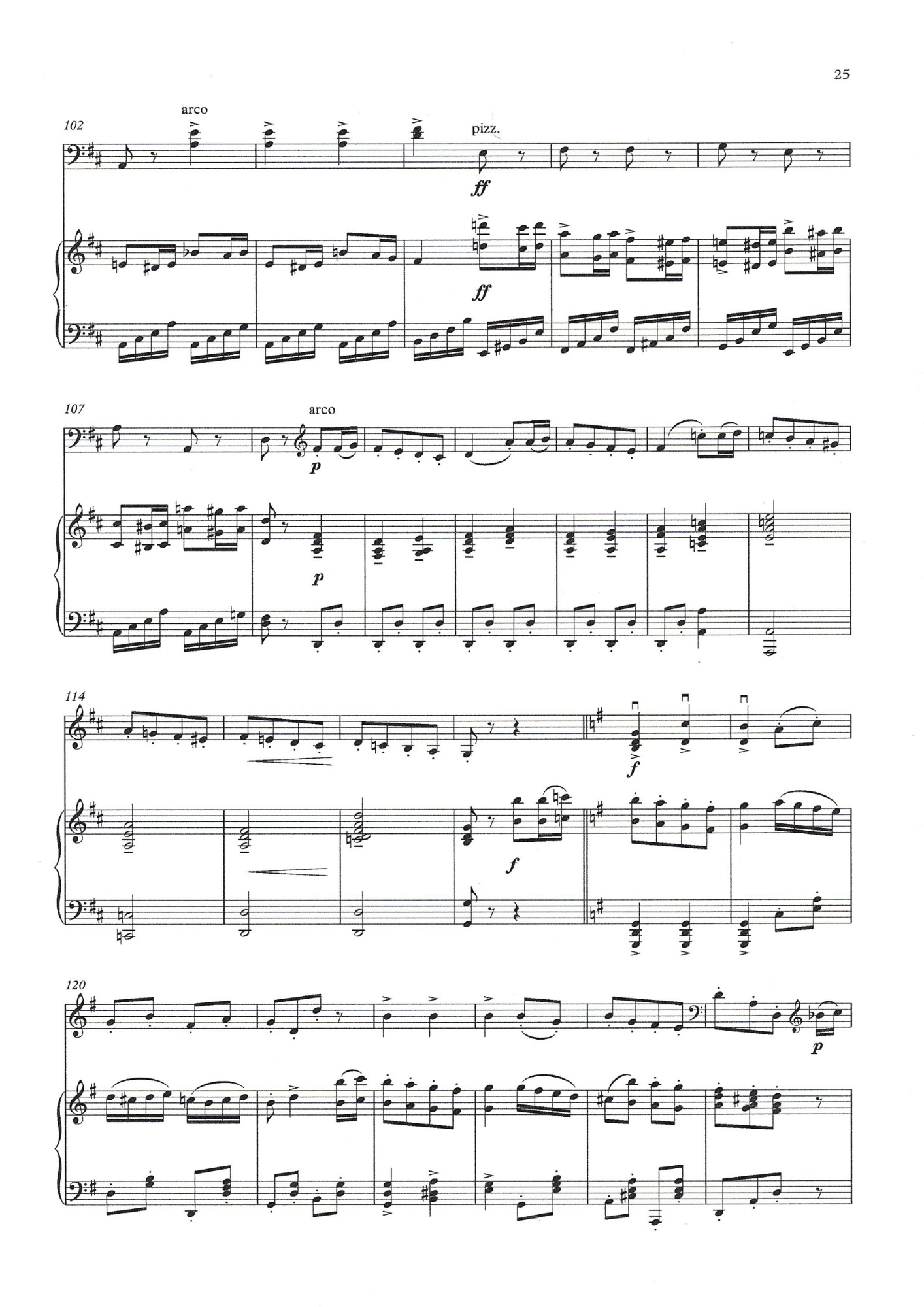
Sonata No.1 was probably composed during the early years of the 20th-century and first published in 1909 by Universal Edition (Vienna). The three contrasting movements explore and exploit the virtuosic and singing potential of the double bass alongside a colorfully supportive and rhythmically inventive accompaniment.
The first movement (Allegro) begins with a heroic and martial theme, performed in octaves by both performers, followed by a folk-like second theme which exudes Viennese charm and elegance. Throughout there is effective interplay between the two performers, a witty and rhythmically charged middle section, and a short but exciting coda which brings the movement to a bright and successful close.
The second movement (Andante religioso) is highly romantic, full of wonderful sentiment and expression, and utilizes the entire range of the double bass. The poignant and passionate middle section produces a perfect partnership between both performers, taking the double bass into its highest harmonics, and creating music with an old world charm with the music of Antonín Dvořák never too far away.
The finale (Rondo: Allegro) is vibrant and energetic, with echoes of Czech folk-styles contrasting passages of virtuosity and rhythmic energy. A polka-like theme sets the mood with the melodic interest passed from player to player. A sudden mood and key change takes the music into a more relaxed mood and a fugato passage leads into a recapitulation of the opening theme. The music continues to push forward to a strong, buoyant and triumphant conclusion.
The edition includes two solo double bass parts - one without fingerings and one with the composer’s own fingerings.
A bundle is also available for Concert-Polonaise, Legende Op. 3, Sonata No. 1 Op. 5, and Sonata No. 2 Op. 6 in orchestral tuning.
About the Composer
Adolf Mišek was born in Modletín (Bohemia) on 29 August 1875, the son of a weaver and bandmaster. He studied double bass with František Simandl at the Vienna Conservatoire from 1890-94 and from 1898-1900 was a bassist with the Vienna Hofopernorchester (Court Opera Orchestra), and subsequently with the Vienna Philharmonic. He maintained his Czech connections however by conducting a number of Czech choirs and orchestras in Vienna during these years.
From 1910-1914 Mišek taught double bass at the Neue Wiener Konservatorium (New Vienna Conservatoire) but when the First Czech Republic was established in 1918, after the end of the First World War, he resigned from the orchestra and returned to Prague, where he lived for the rest of his life. He was appointed soloist of the National Theatre Orchestra (1920-34) in Prague and spent the last twenty years of his life as a freelance composer, teacher and bassist. Mišek died in Prague on 20 October 1955.
Mišek composed three sonatas for double bass and piano and the first two have become standard repertoire for almost every conservatoire, university and professional double bassist. Sonata No. 1 (Op. 5) was published in 1909 and Sonata No. 2 (Op. 6) in 1911, and it is likely they were written during the early years of the 20th-century and are completely different in terms of style, composition and scope.
About the Editor
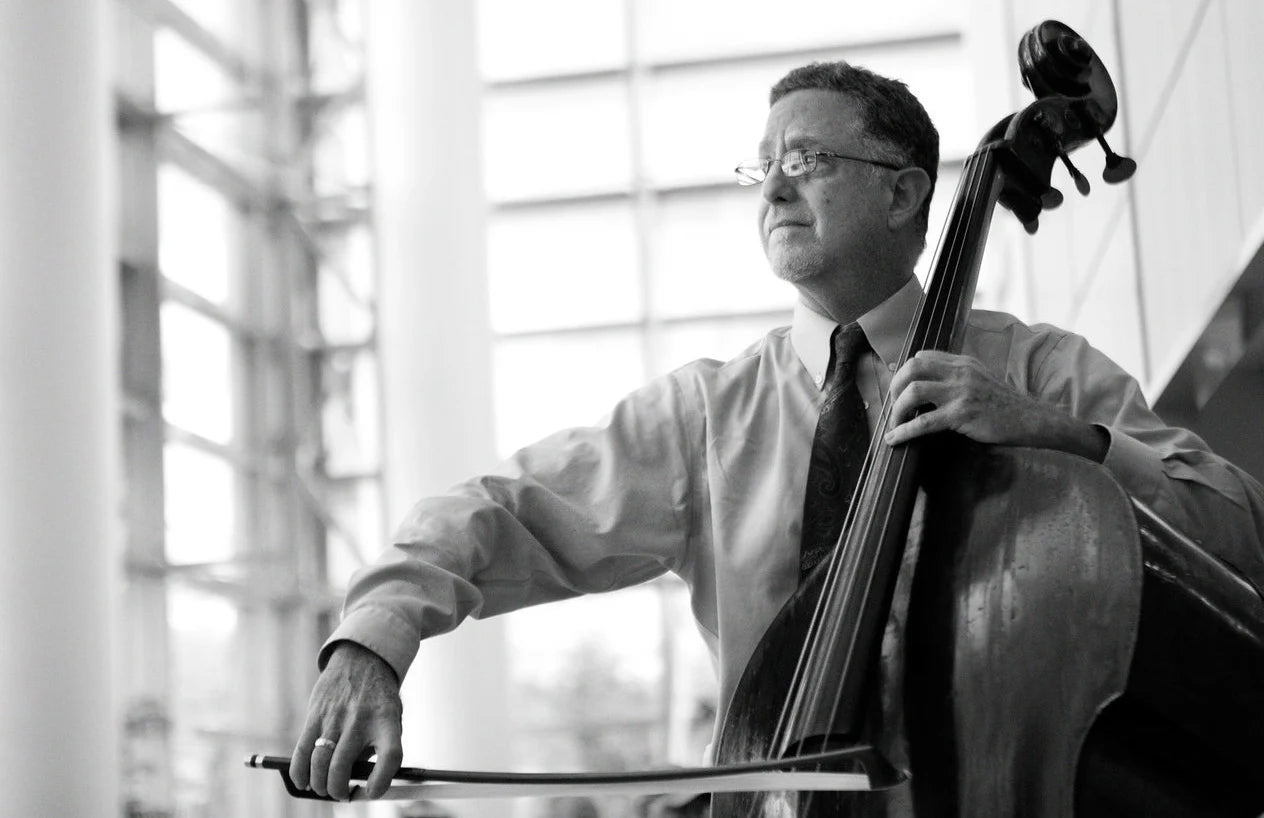
David Heyes (b.1960) studied double bass with Laurence Gray and Bronwen Naish, later at the Royal College of Music in London, and completed his post-graduate studies in Prague with František Pošta (Principal Bass, Czech Philharmonic Orchestra). He has given recitals and masterclasses in 20 countries over the past few years and has been a juror at a number of international competitions, three times as chairman.
David's collaborative work gained him a prestigious award from the David Walter Charitable Trust of New York for his pioneering activities as a soloist, teacher, publisher, and commissioner of new music for double bass and he works with composers throughout the world to expand the double bass repertoire by commissioning new music and by rediscovering forgotten ones. Since 1983 more than 750 works have been written for him, music from one to twenty basses and from beginner to virtuoso, and he has premiered ten contemporary concertos with orchestra.
David began to compose in 2013 and has had music performed and recorded in 32 countries across five continents and is proud to be a D'Addario Performing Artist.