


David Heyes
Adolf Míšek: Sonata No. 2 Op. 6 for double bass in orchestral tuning (ed. David Heyes)
Adolf Míšek: Sonata No. 2 Op. 6 for double bass in orchestral tuning (ed. David Heyes)
Couldn't load pickup availability
About the Composition
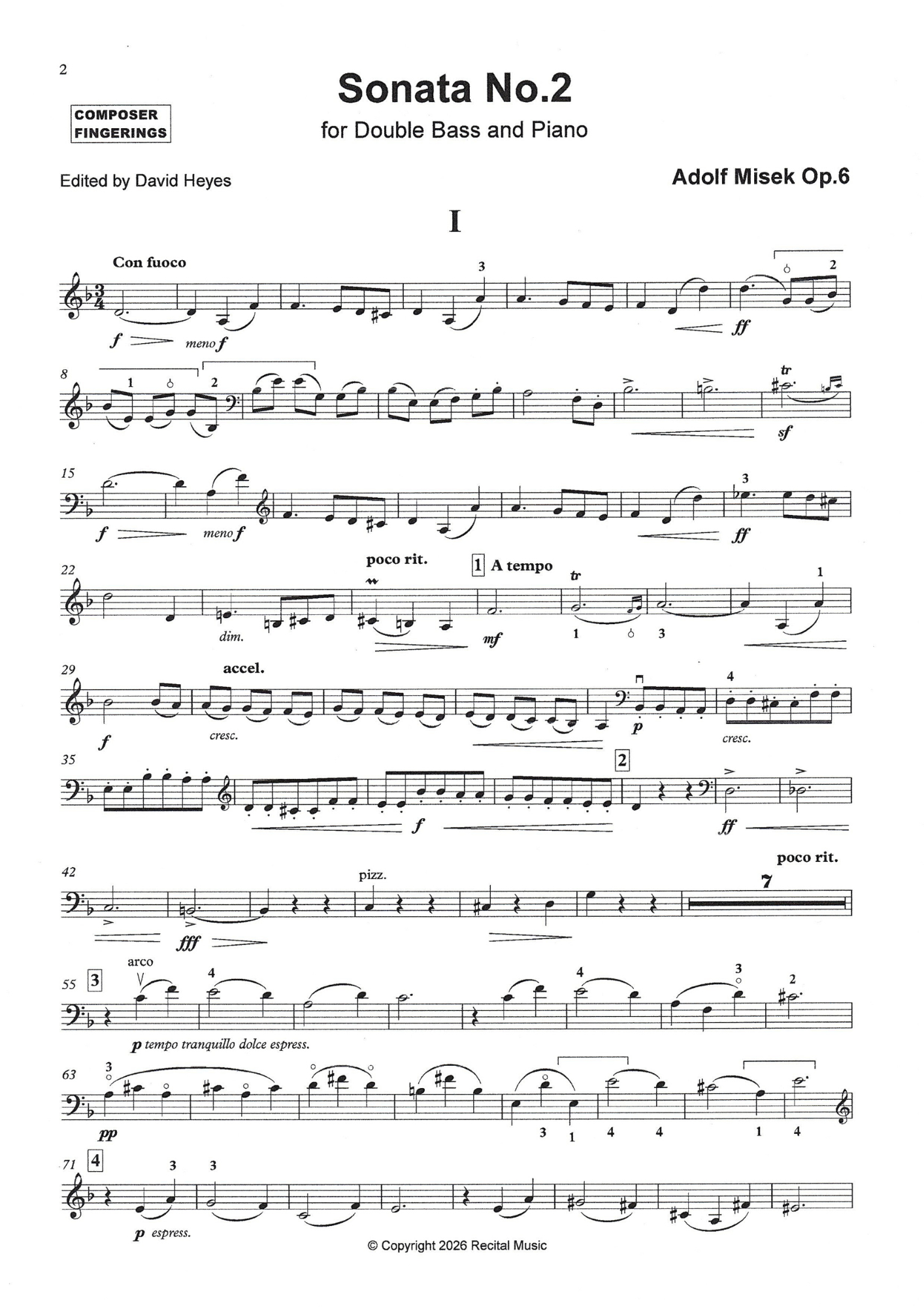
Sonata No. 2 is in four movements and is one of the most popular double bass sonatas in the solo repertoire today. Probably composed in the early years of the 20th-century it was first published in 1911 by Universal Edition (Vienna), only available in solo tuning. The four contrasting movements combine musical and technical challenges in equal measure, exploiting the virtuosic and singing qualities of the double bass, contrasting a colorfully dramatic and independent piano accompaniment which creates a late-romantic sound world, with echoes of times past.
Sonata No. 2 is a work of contrasts and challenges with many opportunities to display more than simply technical proficiency and to demonstrate that the double bass is a serious solo instrument and capable of so much more than non-bassists realise. If any pieces will help to dispel the myth that the double bass is only an orchestral instrument, the sonatas by Adolf Mišek are the ones to do this.
The influence of Brahms and the late-romantic composers of the day are evident in the opening movement, which is full of bravura, romantic breadth and spirit and Brahmsian in design and scope, beautifully contrasted by the slow second movement which is passionate, tender and expressive, alongside its underlying feeling of lost-love and melancholy.
The third movement is the most 'Czech' of the four with its use of the furiant, an exuberant Bohemian folkdance in 3/4 time but with cross accents to give an impression of 2/4 time. Dvořák composed a number of furiants and his influence can be felt throughout the movement.
The finale is dramatic and passionate, full of great energy and momentum, bringing this wonderful sonata to a powerful and successful conclusion. Mišek challenges the bassist, both technically and musically, and certainly knew how to exploit the possibilities of the solo double bass across its entire register.
The edition includes two bass parts - one clean and one with the composer’s original
fingerings.
A bundle is also available for Concert-Polonaise, Legende Op. 3, Sonata No. 1 Op. 5, and Sonata No. 2 Op. 6 in orchestral tuning.
About the Composer
Adolf Mišek was born in Modletín (Bohemia) on 29 August 1875, the son of a weaver and bandmaster. He studied double bass with František Simandl at the Vienna Conservatoire from 1890-94 and from 1898-1900 was a bassist with the Vienna Hofopernorchester (Court Opera Orchestra), and subsequently with the Vienna Philharmonic. He maintained his Czech connections however by conducting a number of Czech choirs and orchestras in Vienna during these years.
From 1910-1914 Mišek taught double bass at the Neue Wiener Konservatorium (New Vienna Conservatoire) but when the First Czech Republic was established in 1918, after the end of the First World War, he resigned from the orchestra and returned to Prague, where he lived for the rest of his life. He was appointed soloist of the National Theatre Orchestra (1920-34) in Prague and spent the last twenty years of his life as a freelance composer, teacher and bassist. Mišek died in Prague on 20 October 1955.
Mišek composed three sonatas for double bass and piano and the first two have become standard repertoire for almost every conservatoire, university and professional double bassist. Sonata No.1 (Op.5) was published in 1909 and Sonata No. 2 (Op. 6) in 1911, and it is likely they were written during the early years of the 20th-century and are completely different in terms of style, composition and scope.
About the Editor
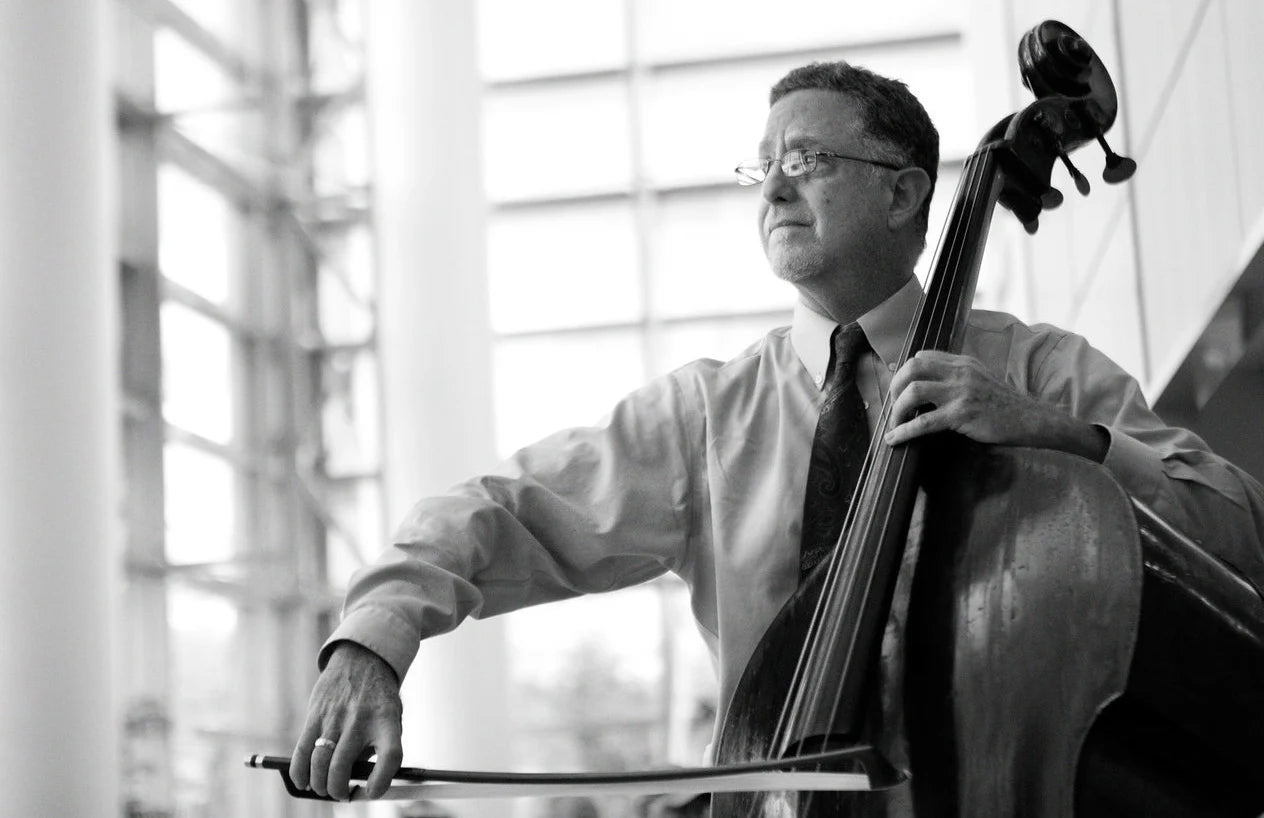
David Heyes (b.1960) studied double bass with Laurence Gray and Bronwen Naish, later at the Royal College of Music in London, and completed his post-graduate studies in Prague with František Pošta (Principal Bass, Czech Philharmonic Orchestra). He has given recitals and masterclasses in 20 countries over the past few years and has been a juror at a number of international competitions, three times as chairman.
David's collaborative work gained him a prestigious award from the David Walter Charitable Trust of New York for his pioneering activities as a soloist, teacher, publisher, and commissioner of new music for double bass and he works with composers throughout the world to expand the double bass repertoire by commissioning new music and by rediscovering forgotten ones. Since 1983 more than 750 works have been written for him, music from one to twenty basses and from beginner to virtuoso, and he has premiered ten contemporary concertos with orchestra.
David began to compose in 2013 and has had music performed and recorded in 32 countries across five continents and is proud to be a D'Addario Performing Artist.