


David Heyes
Bass Quartets Book 6: Eight Pieces for Four Double Basses
Bass Quartets Book 6: Eight Pieces for Four Double Basses
Couldn't load pickup availability
About the Quartets
Bass Quartets Book 6 is a collection of eight inventive and accessible transcriptions from the 16th-19th centuries, in a range of styles and idioms which lend themselves beautifully to the bass quartet medium.
There are a few musical and technical challenges, alongside opportunities to play wonderfully inspiring music in concert venues or at home with friends. Bowings, dynamics and articulations can easily be adapted or amended, at the bassist’s pleasure, to add further variety and interest.
All are new transcriptions which are ideal for the intermediate bass quartet or larger bass ensemble.
The edition includes a score and four solo parts.
Table of Contents
1) J.S. Bach (1685-1750) - Chorale: Wachet Auf The chorale is the seventh and final movement of Bach’s church cantata ‘Wachet auf, ruft uns die Stimme and better known in English as ‘Sleeper’s Awake’. Dating from 1731, this is one of Bach’s most popular cantatas and the chorale, performed by the performers and audience, is based on the third verse of the hymn ‘Wachet auf, ruft uns Stimme, dating from 1599 and composed by Philipp Nicolai. The chorale was originally in E flat major and transcribes beautifully a semitone lower and is also playable by quartet or larger forces.
2) Johann Strauss I (1804-1849) - Alpenkönig Galoppe Op.7 Johann Strauss was the founding father of the Strauss dynasty of Viennese dance composers. The two Alpine-King galops can be performed singly or together, and are typical of Johann’s rhythmic and energetic dance music which remains popular in Vienna and beyond into the 21st-century. The melodic interest has been shared between the four players and the performances should be thrilling and exciting with the speeds decided by each bass quartet. Ideal as an encore, as the final piece in a concert, or simply to play at home with friends.
3 & 4) Matthew Locke (1621-1677) - Galliard & Ayre Matthew Locke was an important English Baroque composer and wrote a wealth of instrumental works and music for the theatre. His Consort of Four Parts, dating from c.1660 and originally for four viols, includes six suites which English composer Peter Warlock (1894-1930) arranged for string quartet. The Galliard and Ayre are contrasting movements from Suite No.1, offering lyrical and elegant music for bass quartet. The Galliard is a slow and stately dance followed by a beautifully tasteful and graceful Ayre.
5) Antonín Reicha (1770-1836) - Adagio No.1 Bohemian composer Antonín Reicha, a friend and contemporary of Beethoven, is particularly remembered for his output of works for wind quintet
and instrumental music. During his lifetime he was unwilling to have his music published, which fell into obscurity after his death, and is only now gradually finding a place in the repertoire. Adagio No.1 is the first of three Adagios for four flutes (Op.18) and was first published in Braunschweig (Brunswick) by Johann Peter Spehr. The transcription for double bass quartet retains the original key of D major and there are short and effective solos for each bassist, beginning with an upward moving scale and taking each player into treble clef.
6) Edvard Grieg (1843-1907) - The Death of Åse Norwegian composer and pianist Edvard Grieg is widely considered to be one of the leading Romantic composers of his day and much of his music has retained its place in the repertoire into the 21st-century. In 1875 Grieg composed incidental music to Heinrich Ibsen’s play Peer Gynt, premiered the following year, and he subsequently arranged two orchestral suites from the music. The Death of Åse is the second movement in Suite No.1 Op.46 and is scored for strings. Åse is the mother of Peer Gynt and the music, which is sad and soulful, is in four-bar phrases and the transcription for double bass quartet emphasises the darkly sonorous qualities of the instrument throughout much of its range. It can be played with or without mutes.
7) Cristóbal de Morales (c.1500-1553) - Ad Tantae Nativitatis Cristóbal de Morales was a Spanish composer of the Renaissance, one of the first Spanish composers to have an international reputation, and wrote a wealth of sacred choral music. Ad Tantae Nativitatis is originally for SATB choir, composed to celebrate the Nativity, and the arrangement for double bass quartet creates opportunities to experiment with dynamics, playing with or without vibrato, and each bassist being of equal importance.
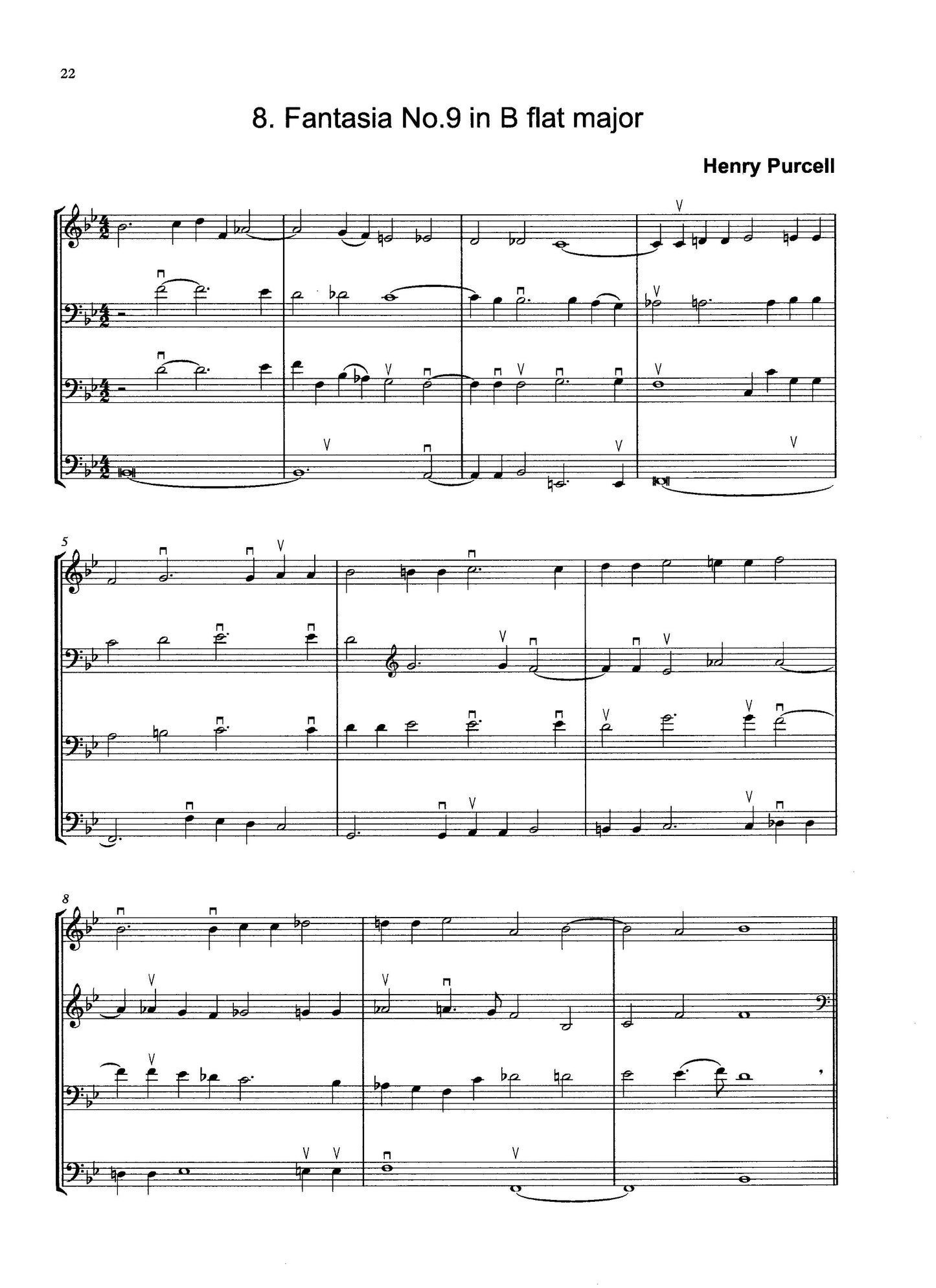
8) Henry Purcell (1659-1695) - Fantasia No.9 in B flat major Composed around 1680 and probably for 4 viols, Fantasia No.9 is one of many instrumental works composed by Henry Purcell, the leading English composer of his day. In one movement, the stately introduction contrasts music of a more rhythmic and contrapuntal nature. There are musical and technical challenges for each player alongside occasions to work independently, in pairs and as a quartet. The driving rhythms create energy and momentum in music which retains its quality and spirit almost 350 years after it was written.
About the Composer
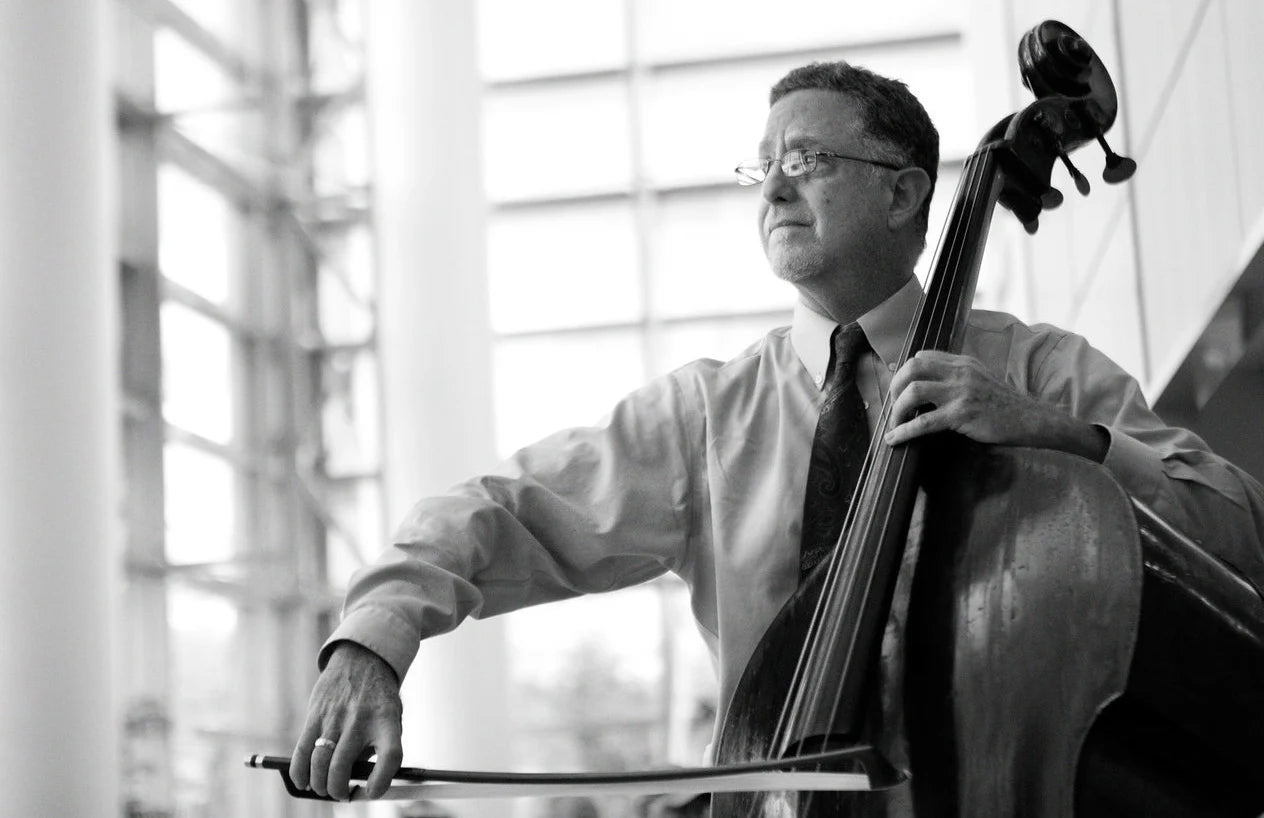
David Heyes studied double bass with Laurence Gray and Bronwen Naish, later at the Royal College of Music in London, and completed his post-graduate studies in Prague with František Pošta (Principal Bass, Czech Philharmonic Orchestra). He has given recitals and masterclasses in 20 countries over the past few years and has been a juror at a number of international competitions, three times as chairman.
David's collaborative work gained him a prestigious award from the David Walter Charitable Trust of New York for his pioneering activities as a soloist, teacher,
publisher, and commissioner of new music for double bass and he works with composers throughout the world to expand the double bass repertoire by commissioning new music and by rediscovering forgotten ones. Since 1983 more than 700 works have been written for him, music from one to twenty basses and from beginner to virtuoso, and he has premiered ten contemporary concertos with orchestra.
David began to compose in 2013 and has had music performed and recorded in 36 countries across five continents. He is a D'Addario Performing Artist and has recently commissioned a solo double bass from British master-luthier Martin Penning.